Get to Grips with Your Romanian Rescue Dog's Garden Barking
SELF-STUDY COURSE: Immediate access to exercises, strategies & protocols that will help you reduce your dogs garden barking
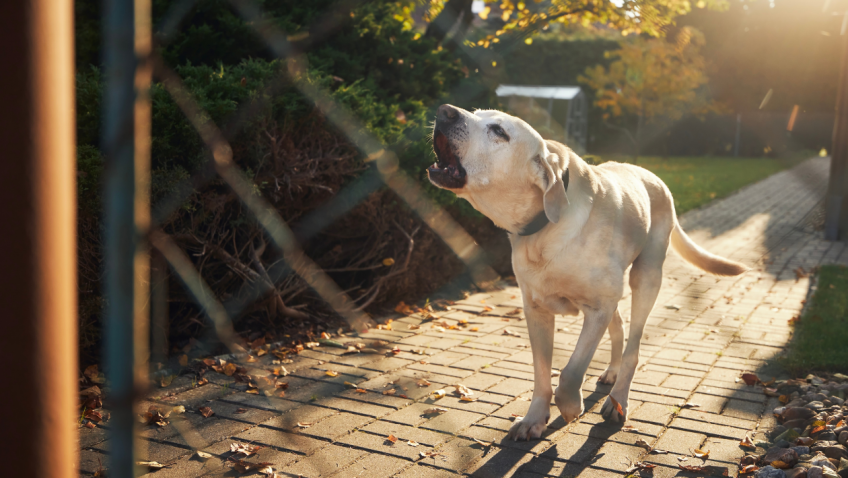
Excessive garden barking is a common challenge for adopters of Romanian & foreign rescue dogs, and it’s something that can be disruptive, frustrating, and stressful for you, your dog, and your neighbours.
I know because I had my own BIG garden barker.
But for years now, Tramp pretty much 'lives' in the garden from April to October - with minimal, appropriate only levels of barking.
As we transition into the spring and summer months barking can become even more problematic with the increase in garden activity around you.
Neighbours have the audacity to come out and do gardening, dogs barking down the street, children playing, and even birds daring to fly overhead!
Meaning you're running from the house to the garden a gazillion times a day wondering why they have to bark so much (because your Rommie lives outside in summer right? 😁)
What's more - If this is happening a lot, it can have a knock on effect and become a contributing factor to other behaviour challenges, like reactivity on walks.
But your dog isn't just being difficult - this is deeply instinctive behaviour
The majority of Romanian and overseas rescue dogs are naturally evolved descendants of street dogs (even though they may never have been an actual street dog themselves).
They're genetically predisposed to be alert barkers. They're environmentally sensitive, and naturally territorial - the result of which is a dog with a lower threshold for barking behaviour.
If it moves bark at it - if I’m worried about it bark at it - if it makes a noise bark at it - if I don’t like it bark at it - if it looks scary or weird bark at it.
They bark first because their default mechanism is;
🐕 'I don’t know what that is, therefore I want to make sure it knows I'm here.
🐕 'I'm ready to defend myself and my space if necessary'
🐕 'I'd like that to go away or keep it's distance until I can decide whether it’s a threat/not a threat, safe/not safe, going to hurt me/not going to hurt me, a problem/not a problem etc.'
Which means you can end up with a lot of barking!
Excessive garden barking can show up with any dogs - but is especially common with:
✅ New Arrivals
✅ Guardian breeds or cross breeds (Mioritics, Carpathian, Bucovina Shepherd types)
✅ Adolescent Dogs
✅ More fearful/nervous/anxious dogs
I asked my social media community about this recently and their replies were a lot 😂 The trigger lists were long, which tells you everything about why this particular issue can be so hard to get on top of. Because here's the thing - the back garden isn't a straightforward environment to work in.
It's not one trigger, it's dozens. Different every day. Different depending on the weather, the time, what the neighbours are doing. A standard desensitisation plan doesn't always cut it here - but what does work is a multi-faceted approach.
The #1 Mistake People Make with Their Garden Barky Dogs
The biggest mistake I see people making when they're trying to reduce their dogs garden barking is repeatedly taking, or calling their dog back indoors.
I totally get it! When the barking is a lot - it fries everyone's nerves! - and in those moments, management is necessary.
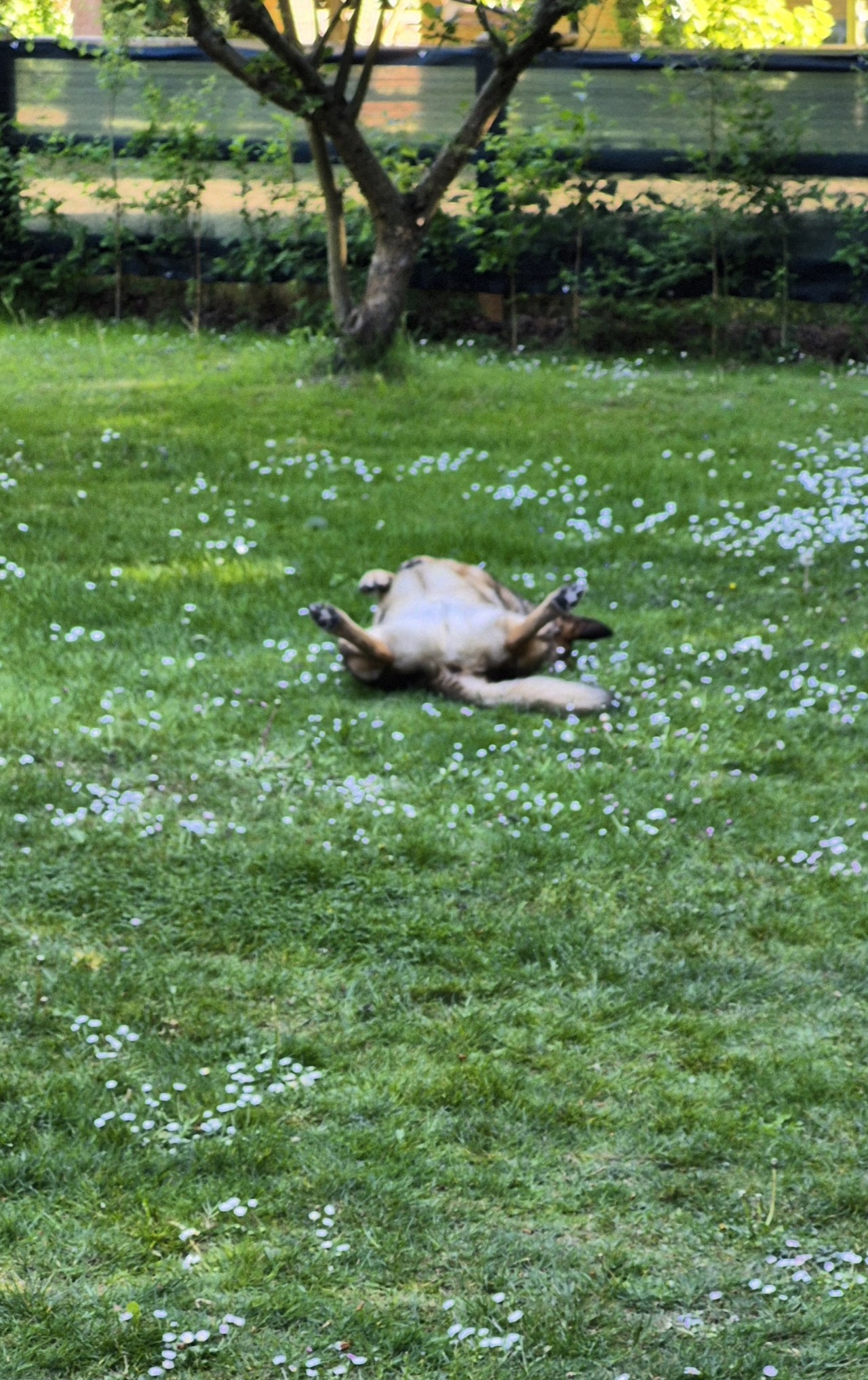
But here's the longer term problem and why you may not be seeing successful results... if your dog never spends extended periods of time in the garden, they will never habituate to the noises around them.
Giving this some time and focused attention now, for 2-3 weeks, could mean the difference between you and your dog enjoying the summer in the garden, together - or not.
'If you change nothing, nothing will change' 😉
👇 Quick Start Tips for You Below 👇
Tip #1
It's not just about training
Before you work on the barking itself, consider how much your dog is practising the behaviour they're already doing.
Unlimited, unsupervised access to the garden usually means unlimited opportunity to practise barking - and barking is self-reinforcing. The more they do it, the more embedded it becomes
✅
Start managing the environment before you try to work on the behaviour, or you'll struggle to see progress no matter what you try.
Tip #2
Be Proactive, not reactive
Most people try to interrupt and ‘train’ when their dog’s are already barking and at full intensity.
By then, your dog is way too fired up to be able to respond or learn anything that will prevent barking in the future. The real work that reduces garden barking happens before the barking starts.
✅
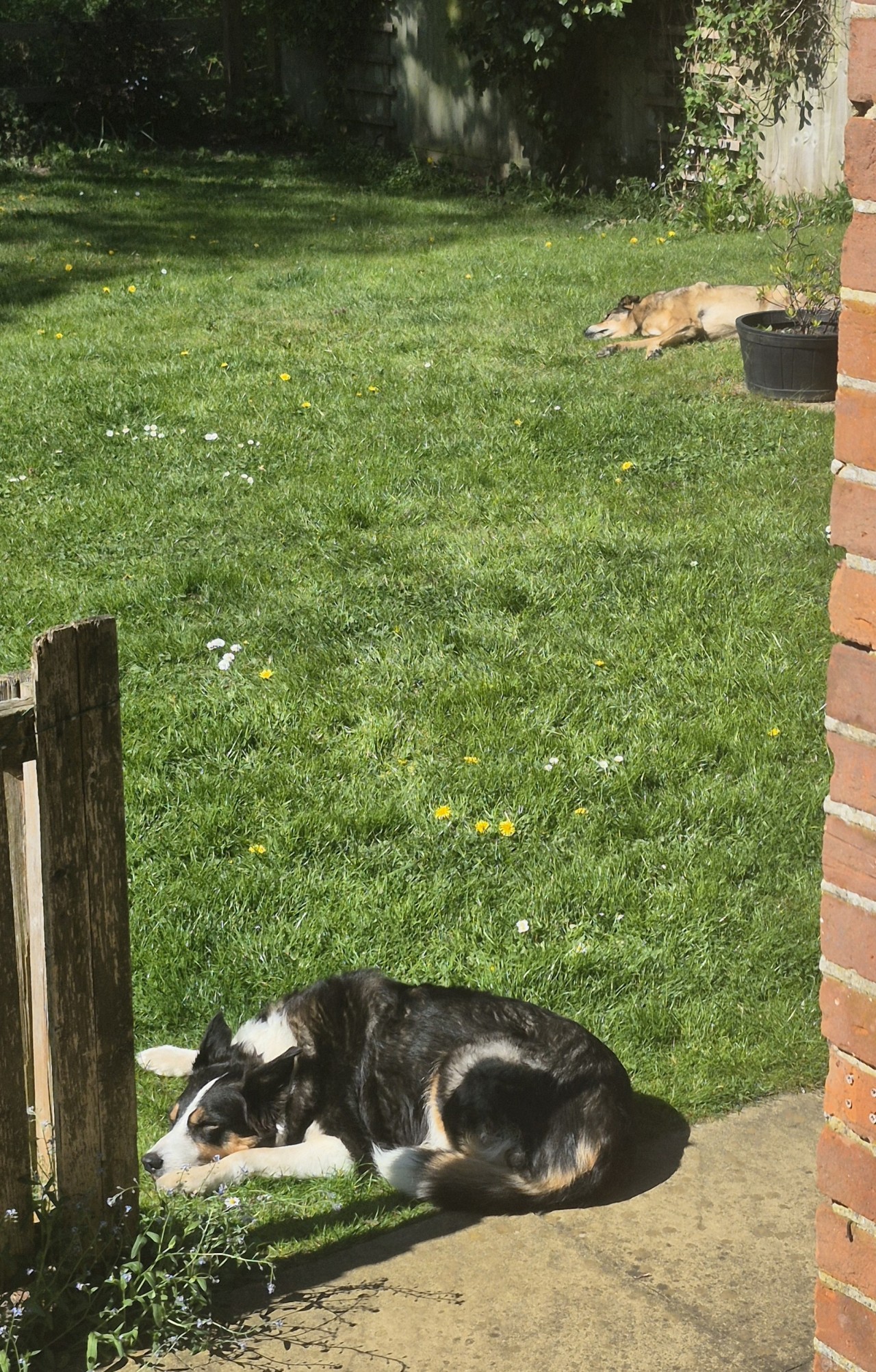
Proactively lower arousal in the garden through space management, calm space transitions, and predictable behavioural patterns that facilitate calmness.
Tip #3
Relaxation is a Skill
A dog who struggles to settle in the garden isn't choosing not to - they genuinely don't know how to.
I mentioned in Tip #1 how, the more your dog practises barking, the more embedded that behaviour becomes. Well lucky for us the opposite is also true!
✅
Teach your dog how to settle in the garden - Show them how to relax in that space, and that they can relax out there – even when things are going on around them.
Tip #4
Handling Barking Once it Starts
A dog that never barks is an unrealistic expectation - especially if you have any guardian breed in the mix.
Yes, you can 100% reduce the frequency and intensity of the barking, but for those times when barking happens you want a way to intervene reliably and effectively.
✅
Teach and proof 1 or 2 key foundation skills - like a recall or positive interrupter - that will help you easily regain your dog’s attention, even after they’ve started barking.
If garden barking is stressing you out right now, the tips above can help, but
Working Through this Properly Can be a Game Changer
I know first hand how exhausting and frustrating this behaviour can be.
Here's what working through this properly can do for you and your dog...
- Provide immediate relief & minimise stress & frustration for you and your 'barky' dogs
- Reduce the stress and arousal that drives the behaviour
- Create environments that promote relaxation in the garden
- Reduce the frequency & intensity of your dog's garden barking - even when you're not out there with them
- Show you how to help your dog habituate to environmental noises & triggers
- Explain the 3 simple skills your dog needs so you can easily interrupt your dog's garden barking & have them settle down again quickly
Does this actually work?
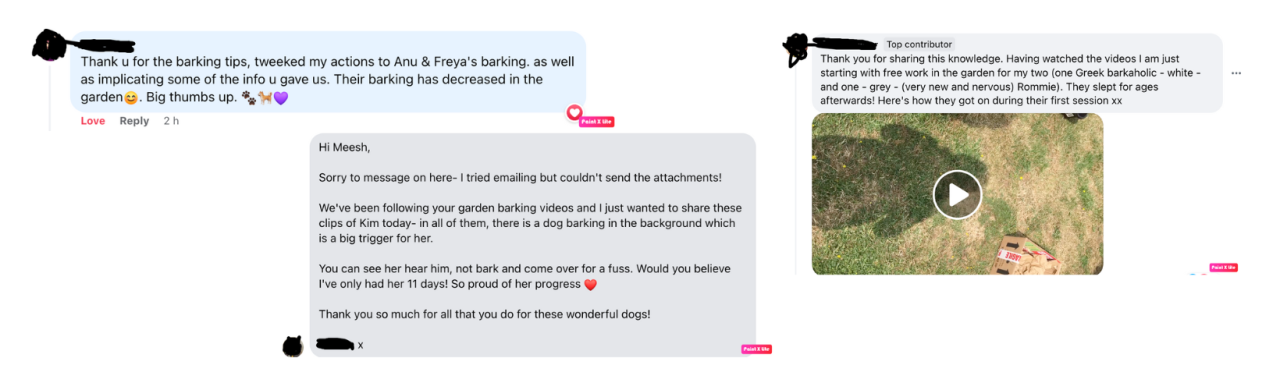
I worked through exactly this process recently with a lovely client whose dog had been an excessive garden barker for years.
Pedestrians, dogs, birds, delivery vans - the full list. Within two weeks she reported a 50% reduction. 🙌
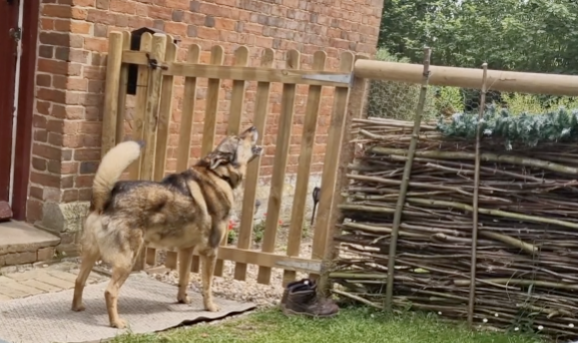
And I know what I've shared in this mini-course can achieve all of that for you - because my own Romanian Rescue boy, Tramp (Guardian breed mix), was a BIG garden barker years ago.
I successfully worked through this process with him not just once, but three times (each time we've moved home)
These days, he's in the garden from dawn 'til dusk, barks an appropriate amount, self-settles,
and I don't have to keep going out to deal with him barking
Enrol Today & Get to Grips with Your Dog's Garden Barking This Year
677e59fe0dd13_lg.jpg)
About Your Presenter: Meesh Masters
Hi, my name is Meesh Masters, and I am the founder of The Dog’s Point of View and a leading specialist in living and working with Romanian and overseas rescue dogs.
My courses, workshops, and training programmes are all designed specifically for these naturally evolved dogs, recognising their unique instincts and behavioural needs.
With 20 years experience as a trainer and behaviour consultant, and over 10 years working exclusively with Romanian and overseas rescue dogs - my aim is to help both pet guardians and canine professionals understand and support these often sensitive and complex, yet incredible dogs in a way that aligns with their true nature.